
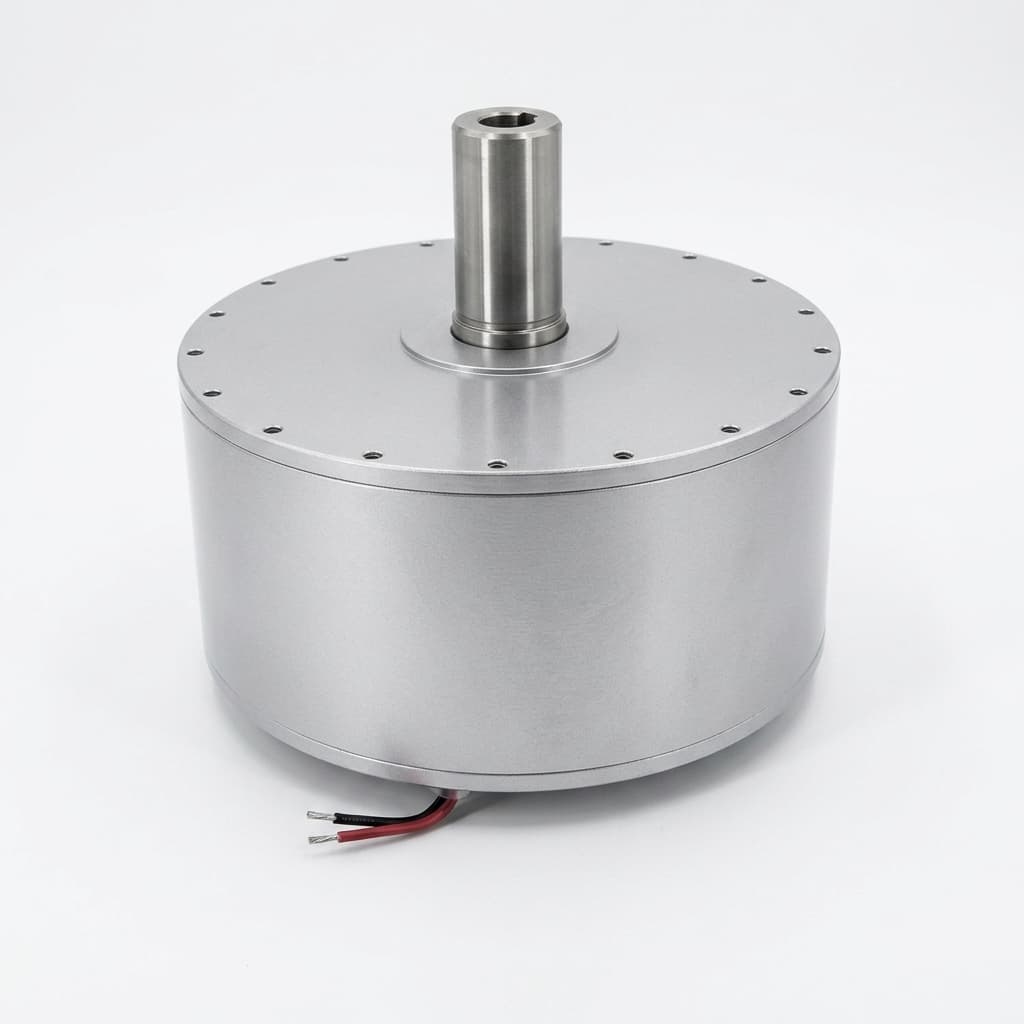
Why Coreless Axial Flux Generators are Dominating Light Renewable Energy
Discover why coreless maglev AFPM generators are becoming the gold standard for vertical axis wind turbines (VAWT), micro-hydro, and low-RPM energy capture.
The distributed renewable energy sector—particularly small-scale wind and micro-hydro power—is undergoing a profound shift. Traditional geared induction generators and iron-core alternators are rapidly being replaced by Direct-Drive Coreless Axial Flux Permanent Magnet (AFPM) Generators.
From residential Vertical Axis Wind Turbines (VAWT) to portable hydro-generators, the coreless AFPM topology offers a unique set of physical and electrical characteristics uniquely suited for low-speed, variable-torque environments. For OEMs and system integrators, understanding the technical advantages of this direct-drive generator architecture is critical for maximizing energy yield and system lifespan.
Executive Summary for System Integrators:
Coreless AFPM Generators eliminate the iron stator core, resulting in zero cogging torque for ultra-low wind speed startup (1.5 m/s) and completely eliminating iron-core Eddy current losses. This enables a flat efficiency curve (>94%) across highly variable RPMs. Their wide pole-count geometry allows for true gearbox-free direct-drive energy capture in urban VAWT and micro-hydro applications.
1. Zero Cogging Torque: The Low-Wind Startup Breakthrough
A primary mechanical constraint for small wind turbines is startup torque. Traditional generators rely on silicon steel (iron) cores in their stators. The magnetic attraction between the spinning permanent magnets on the rotor and the stationary iron teeth of the stator creates "cogging torque." This is the physical magnetic resistance or "bumpiness" you feel when turning a motor by hand. The turbine blades must overcome this threshold before they can begin spinning and generating power.
Coreless AFPM generators eliminate the iron core entirely.
Instead of wrapping copper wire around iron teeth, the stator consists of self-supporting copper coils encapsulated in a high-strength, thermally conductive epoxy resin. Because there is absolutely no iron for the magnets to attract, there is zero cogging torque.
Consequently, VAWTs and low-speed turbines can begin rotating in wind speeds as low as 1.5 to 2.0 m/s (cut-in speed). Over the course of a year, this early startup translates to a significantly higher total energy yield, especially in regions with inconsistent or light wind patterns.
2. The Direct-Drive Advantage at Low RPMs
Generating usable voltage typically requires high rotational speeds, which is why legacy systems use heavy, noisy gearboxes to step up the low RPM of a wind turbine to the high RPM required by a standard generator.
Axial flux generators circumvent this via their wide, flat diameter. The pancake geometry allows engineers to pack a massive number of alternating magnetic poles (often 24, 36, or 48 poles) along the outer perimeter. Because voltage generation is a function of the rate of magnetic flux change ($dV/dt$), having more poles passing over the coils per revolution allows the AFPM generator to produce high voltage at incredibly low speeds (e.g., 50 RPM to 300 RPM).
This enables a true direct-drive system where the turbine blades bolt directly to the generator shaft. Eliminating the gearbox means:
- Higher Transmission Efficiency: No 5-10% mechanical loss through gears.
- Zero Maintenance: No gear oil to leak or replace.
- Acoustic Stealth: Drastically reduced mechanical noise, crucial for urban VAWT installations.
3. Exceptional Efficiency and Flat Performance Curves
Wind and water flow are inherently unpredictable. A generator must perform efficiently at 10% load as well as at 100% load.
In a traditional iron-core generator, changing magnetic fields induce Eddy currents and hysteresis losses within the iron (commonly called "core losses" or "iron losses"). These losses scale exponentially with speed (P_core ∝ f²) and drag down overall efficiency.
In a coreless AFPM generator, iron losses are strictly zero. The only electrical losses are the $I^2R$ (copper) losses in the stator windings. Because of this, coreless AFPM generators maintain a remarkably flat and high efficiency curve—often exceeding 94-96% peak efficiency—across a massive range of operating speeds and partial loads. This ensures maximum energy harvest during fluctuating weather conditions.
Engineering Pitfall: AC to DC Rectification Losses
While the coreless generator itself may hit 96% efficiency, many OEMs fail to account for the voltage drop across standard diode bridge rectifiers (converting 3-phase AC to DC for batteries). In low-voltage systems (e.g., 12V or 24V), a 1.5V diode drop can wipe out 10% of total system efficiency. Always match your AFPM generator with an active MOSFET rectification controller or wind a higher-voltage stator (e.g., 96V/120V) to minimize relative rectification losses.
Efficiency Curve: Coreless AFPM vs. Iron-Core Generator
4. The "Maglev" Effect and Mechanical Longevity
A common implementation of the coreless AFPM generator is the dual-rotor configuration. A single epoxy-encapsulated stator disk is suspended perfectly between two spinning rotor disks embedded with strong NdFeB magnets.
If the airgaps on both sides of the stator (typically 1.5mm to 2.5mm) are perfectly symmetric, the immense magnetic pull of the top rotor (often >2,000 N) is perfectly canceled out by the pull of the bottom rotor. This neutralizing of axial forces drastically reduces the axial thrust load placed on the central shaft bearings.
In the small wind industry, this is often marketed as "Magnetic Levitation" or "Maglev" technology. By relieving the bearings of extreme thrust loads—and utilizing high-grade sealed SKF or NSK bearings—the operational lifespan of the generator increases significantly, providing decades of reliable operation with minimal maintenance in harsh off-grid environments.
Sourcing Coreless AFPM Generators for Your Project
However, manufacturing a coreless stator requires precise epoxy potting, advanced vacuum-assisted resin transfer molding (VARTM) to remove air bubbles, and extremely tight airgap machining tolerances.
At AFPM Motor, our OEM division specializes in the serial production of coreless pancake generators ranging from 500W to 20kW for renewable energy integrators. Whether you are launching a new VAWT series, a micro-hydro project, or a specialized kinetic energy recovery system, we can customize the winding turns, pole counts, and RPM/Voltage curves to perfectly match your fluid dynamics.
Explore our AFPM Generator lineup or Contact our engineering team to request performance curves and CAD models for your next renewable energy project.
Author

Categories
More Posts
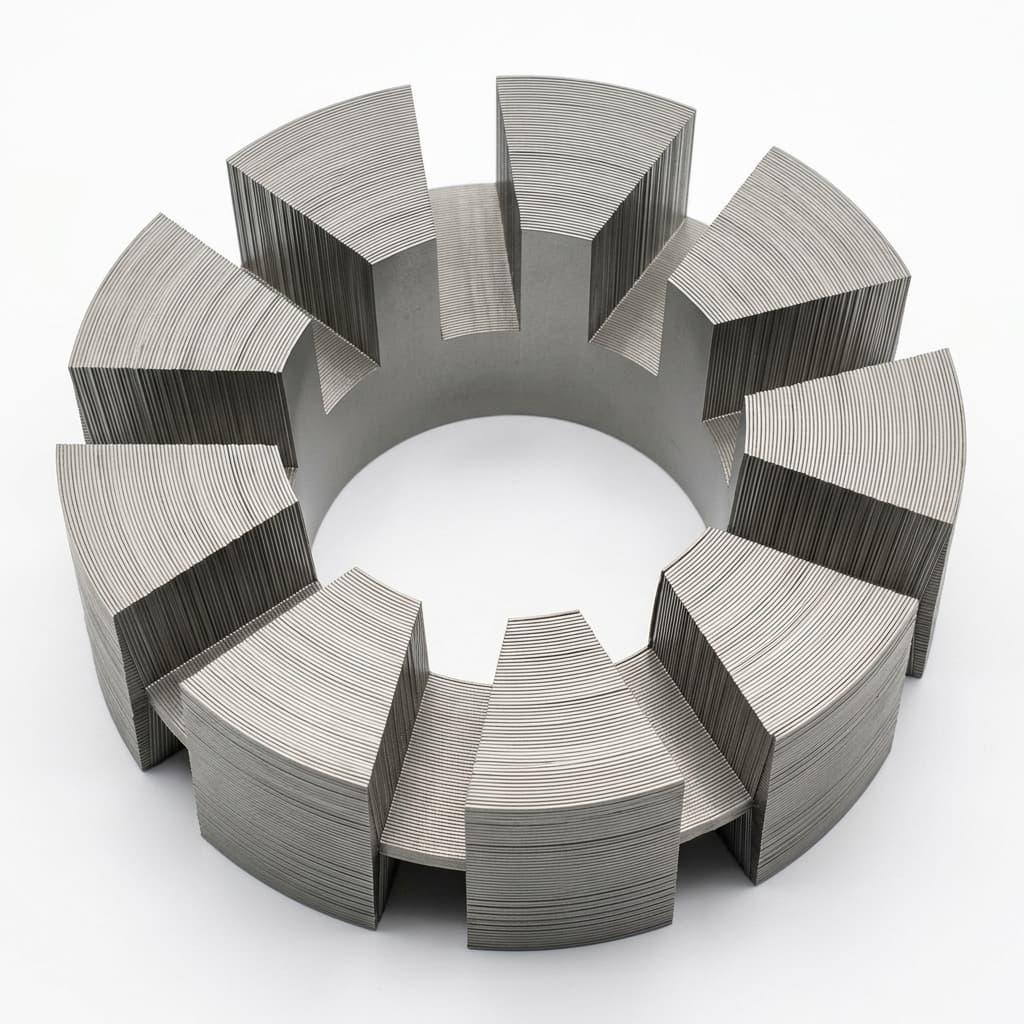
Flat Wire vs. Round Wire Winding in AFPM Stators: Impact on Efficiency and Manufacturing
A quantitative analysis of flat (rectangular) copper wire versus round wire winding techniques in axial flux motors, covering fill factor, thermal performance, manufacturing cost, and OEM sourcing implications.
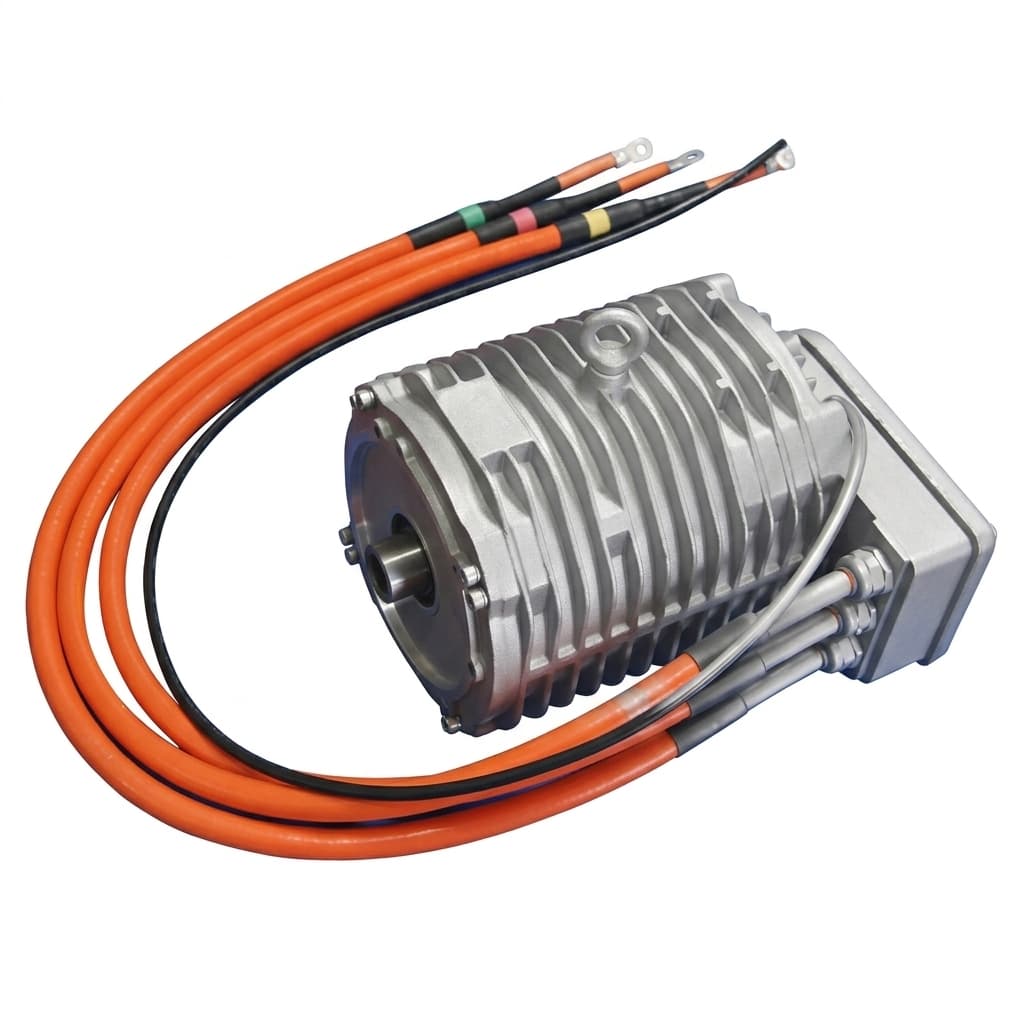
Axial Flux vs. Radial Flux Motors: A Detailed Engineering Comparison
An engineering analysis of the technical differences, torque density advantages, magnetic flux paths, and manufacturing tradeoffs between axial flux and radial flux permanent magnet motors.
Foxconn & Magnax €35.5M Investment: Industrializing Yokeless Axial Flux Motors
Pan-International (Foxconn Group) invests €35.5M in Magnax to scale yokeless AFPM production. Discover the supply chain impact, risk factors, and engineering procurement actions.