

Scaling Axial Flux Motors in 2026: How the EU MAXIMA Project Addresses Manufacturing and CRM Constraints
Analysis of the EU MAXIMA Project's 2026 advancements in reducing 60% CRM and using modular design to overcome mass-production bottlenecks in axial flux motors.
Executive Summary for Sourcing and Engineering:
In July 2026 (2026-W31), the EU Horizon Europe MAXIMA Project (Grant 101096097) demonstrated significant progress towards commercializing Axial Flux Permanent Magnet (AFPM) motors by shifting the focus from pure performance to manufacturing yield and Critical Raw Material (CRM) supply chain resilience. Through modular stator/rotor design and multiphysics digital twins, MAXIMA targets a 60% reduction in rare earth dependence and a highly automated assembly process. For procurement teams, this defines the next-generation baseline for evaluating AFPM supplier scalability and environmental compliance.
What Changed: From Performance to Manufacturing Yield
Historically, the conversation around axial flux motors has centered on their superior torque density (>23 kW/litre, >7 kW/kg). However, the primary barrier to widespread adoption in automotive and industrial sectors has been manufacturing complexity—specifically coil forming, tight air-gap assembly tolerances, and high reliance on volatile Critical Raw Materials (CRMs).
The MAXIMA project fundamentally shifts this paradigm. Supported by a consortium of 11 partners across 6 EU states, the project targets structural manufacturing bottlenecks. By employing Modular AXIal flux Motor for Automotive principles, the initiative standardizes rotor and stator stacks to allow variable power outputs without custom tooling for every SKU. This specifically pivots AFPM technology away from niche hypercars into the 60 kW – 120 kW mass-market segment.
Key Metric Shifts: Baseline vs. 2026/2027 Goals
| Metric / Parameter | Industry Baseline | MAXIMA Target (2026-2027) | Sourcing Implication |
|---|---|---|---|
| Power Target Range | >150 kW (Niche/Sports EV) | 60 kW – 120 kW (Mass Market) | Viable for standard fleet EVs |
| CRM Dependency | >1.5 kg/motor (Nd, Dy) | <0.6 kg/motor (60% Reduction) | Lower geopolitical price volatility |
| Unit Cost at Volume | €12 - €18 / kW | < €6 / kW (at 100k units) | Approaching radial flux cost parity |
| Assembly Yield | Low (Tight manual tolerances) | High (Automated stacking) | Predictable lead times |
| Recyclability | < 20% (Glued magnets) | > 60% (Design for Disassembly) | Compliance with EU end-of-life directives |
Modular AFPM Assembly (MAXIMA Concept)
Impact on Buyers and Sourcing Strategies
For procurement teams building supply chains in 2026, relying purely on legacy prototype metrics is a critical risk. The MAXIMA project outlines a modern sourcing framework centered on CRM reduction and Life Cycle Assessment (LCA).
- Supply Chain Security: By targeting a 60% reduction in scarce CRM, manufacturers can partially insulate themselves from the geopolitical volatility surrounding Neodymium (Nd) and Dysprosium (Dy).
- Standardization of Supply: Modular stacking means buyers can qualify a single stator-rotor pair with a Tier 1 supplier and scale it across multiple vehicle or machinery platforms, significantly reducing qualification lead times.
AFPM Supply Chain: Legacy vs. MAXIMA Paradigm
The following table contrasts the traditional high-dependency AFPM supply chain against the next-generation modular framework proposed by MAXIMA:
| Sourcing Dimension | Legacy Prototype AFPM | Next-Gen (MAXIMA Standard) |
|---|---|---|
| Material Dependency | High (Heavy NdFeB reliance) | Low (Targeting 60% CRM reduction) |
| Manufacturing Scale | Custom tooling per kW rating | Modular stacking of identical stators/rotors |
| Assembly Complexity | Manual/Semi-auto coil forming | High-yield, automated modular assembly |
| End-of-Life (LCA) | Rare earth magnets glued, hard to recycle | Designed for disassembly, >60% recyclability |
| Digital Integration | Static controller tuning | Multiphysics Digital Twin for dynamic health monitoring |
Multiphysics Digital Twin Integration
A key deliverable of the project is the integration of multiphysics design with a comprehensive Digital Twin. This allows engineers to optimize the control strategy not just for peak torque, but for thermal limitations and predictive maintenance.
Digital Twin Workflow in Modern AFPM Drives
Risks, Evidence Gaps, and Commercial Boundaries
While the 2026 updates are promising, it is crucial for engineering and procurement teams to recognize the commercial boundaries and current evidence gaps of the MAXIMA project:
- Prototype Stage vs. High-Volume Reality: The project is funded through January 2027. The 60% CRM reduction and unit cost targets (<€6/kW at 100k volume) represent project goals and prototype validations, not off-the-shelf COTS (Commercial Off-The-Shelf) availability today. There is an evidence gap regarding actual production yields when scaling to 100k units.
- Time-to-Market Thresholds: Fully industrialized, modular AFPMs matching these specific aggressive LCA metrics will likely require an additional 12-24 months of Tier-1 manufacturing incubation (2028-2029) before they can be procured in massive scale.
- Integration Constraints: Leveraging the digital twin requires compatible advanced inverters and control units. Legacy motor controllers will not extract the full value of the multiphysics modeling.
- Thermal Validation in Extremes: While the digital twin provides excellent predictive maintenance data, empirical data proving long-term thermal stability of the reduced-CRM magnets under continuous heavy-duty cycles (e.g., commercial trucking) remains limited.
Action Checklist for Engineering and Procurement
For teams qualifying AFPM suppliers in the next 12-24 months, adopt the following evaluation criteria inspired by the MAXIMA targets:
- LCA Audit: Request a Life Cycle Assessment report from your AFPM supplier. Can they document the carbon footprint from extraction to end-of-life?
- CRM Roadmap: Does the supplier have a concrete roadmap for reducing dysprosium and heavy rare earth dependencies by 2027/2028?
- Modularity Validation: Evaluate if the supplier uses a standardized stator core design that scales by stacking, rather than requiring bespoke tooling for every power rating.
- Recycling Design: Ensure the motor casing and potting compounds allow for the extraction and recycling of permanent magnets at the end of the vehicle's life.
Frequently Asked Questions (FAQ)
What is the EU MAXIMA Project?
MAXIMA (Modular AXIal flux Motor for Automotive) is a Horizon Europe-funded initiative (Grant 101096097) running from 2023 to 2027, aiming to create sustainable, modular, and high-performance axial flux motors for EVs while drastically cutting critical raw material use.
How does modularity improve AFPM manufacturing?
Axial flux motors can be scaled by "stacking" identical stator and rotor disks on the same shaft. Modularity means a single automated production line can build the core components for a 50kW city car motor or a 200kW sports car motor just by changing the number of stacked modules, reducing capital expenditure on tooling.
Is a 60% reduction in CRM actually achievable without losing torque?
Through advanced Halbach arrays, multiphysics optimization, and improved cooling, the project targets maintaining >23 kW/litre power density while reducing the volume of heavy rare earths. However, it requires highly precise manufacturing tolerances to maintain the reduced magnetic air gaps.
When will MAXIMA-style motors be available for standard purchase?
The project officially concludes in January 2027. Commercial availability through participating Tier 1 suppliers or spin-offs is realistically projected for the 2027-2028 timeframe.
Sources and Verification
The information in this analysis is based on 2026 project disclosures and targets.
- MAXIMA Project Official Factsheet (Horizon Europe Grant 101096097): Detailed project targets including >23 kW/litre density, 60% CRM reduction, and €6/kW volume cost. (Source: europa.eu / MAXIMA Cordis)
- MAXIMA Project Portal: Validation of modular stacking concepts and digital twin architecture goals. (Source: maxima-he.eu)
- PCIM Europe & ICEM 2026 Technical Insights: Reference to the shift from pure performance prototyping to manufacturing yield and sustainability in AFPM commercialization.
- Horizon Europe Zenodo Repository: Open-access publications regarding the Life Cycle Assessment (LCA) and thermal management optimizations in the MAXIMA project. (Source: zenodo.org)
Author

Categories
More Posts
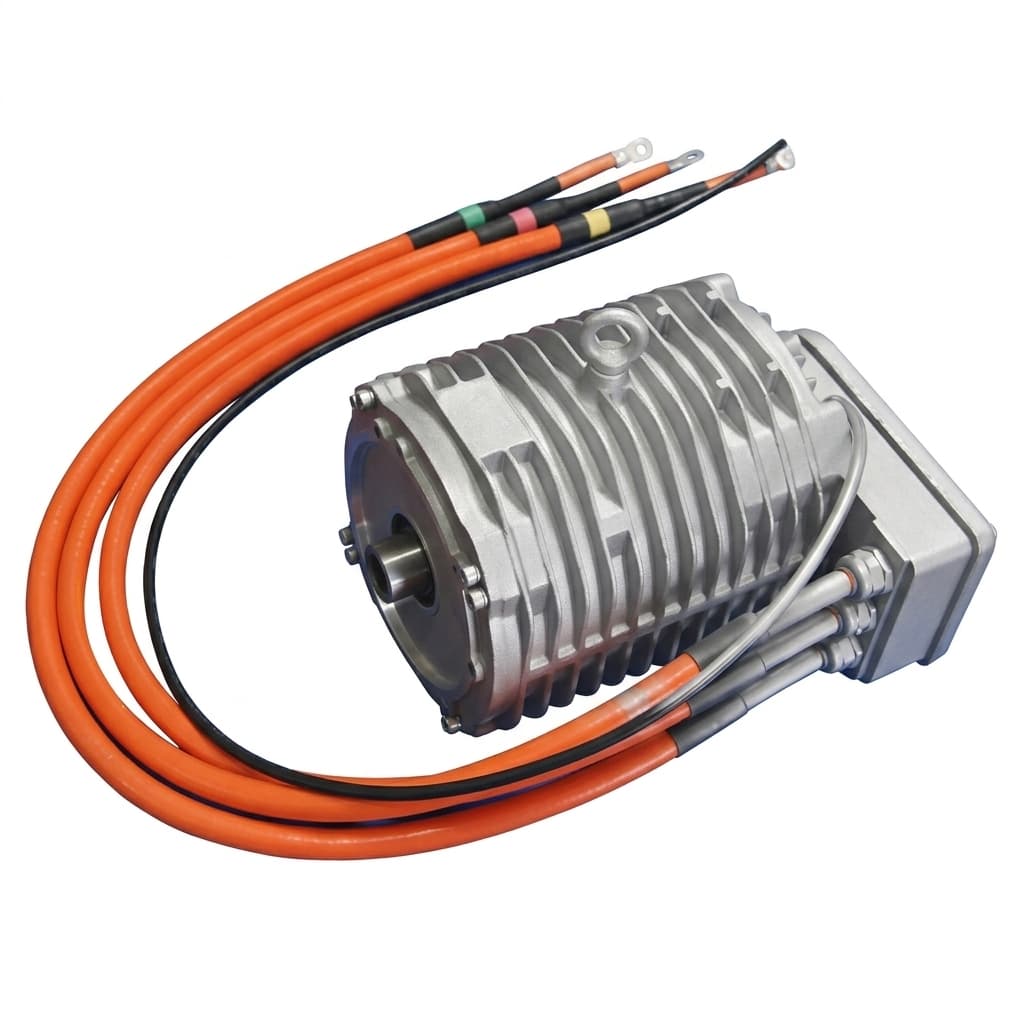
Axial Flux vs. Radial Flux Motors: A Detailed Engineering Comparison
An engineering analysis of the technical differences, torque density advantages, magnetic flux paths, and manufacturing tradeoffs between axial flux and radial flux permanent magnet motors.
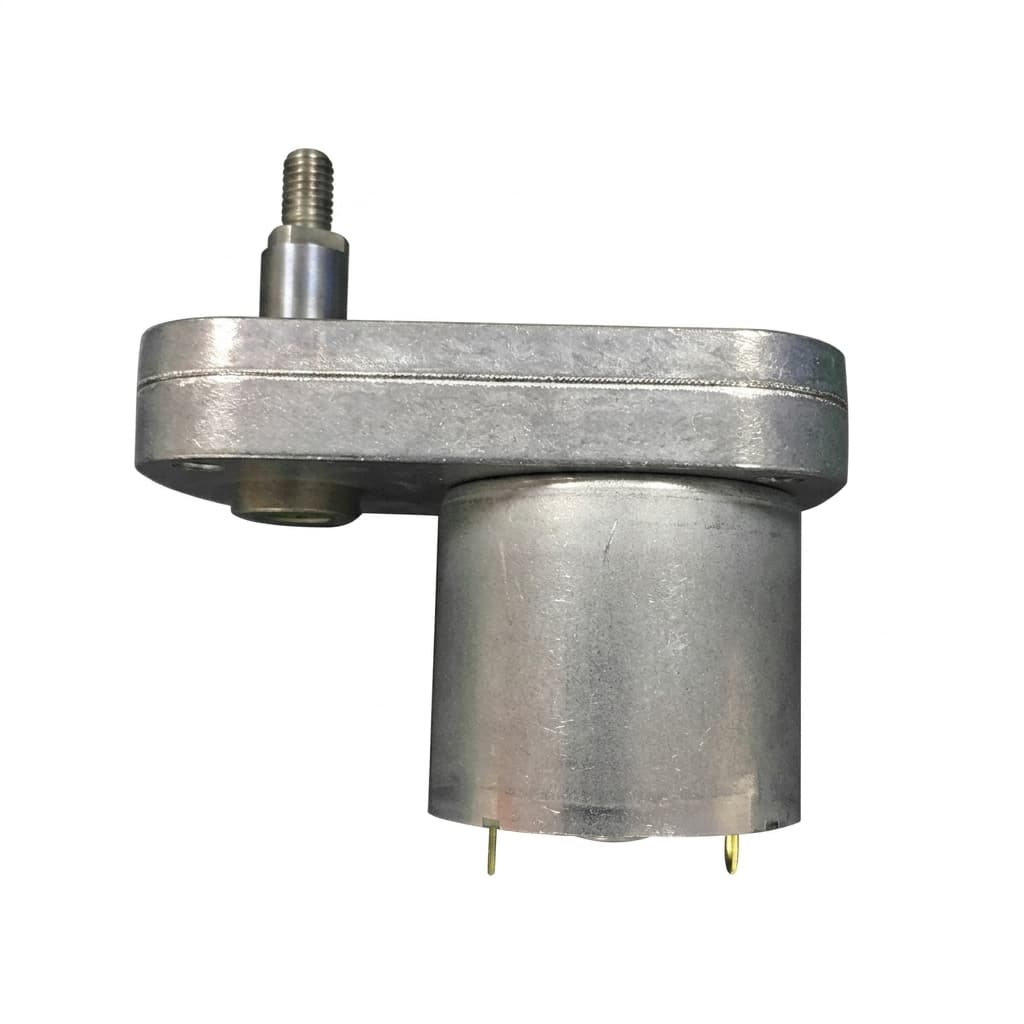
AFPM Motor Sizing for AGV and AMR Wheel Drives: A Direct-Drive Selection Guide
Engineering guide for specifying axial flux wheel hub motors for AGV, AMR, and mobile robot platforms — covering torque sizing, gear elimination, encoder integration, and IP protection.
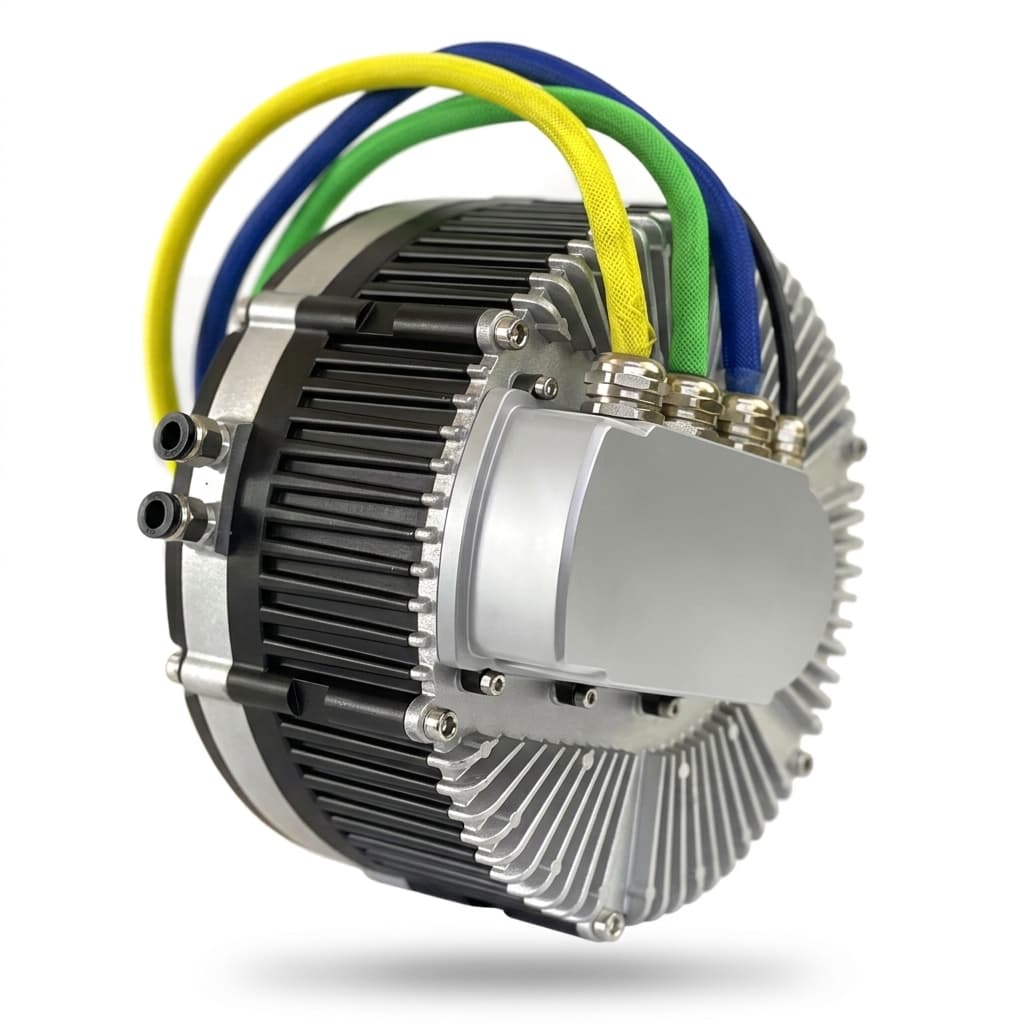
Halbach Array Magnets in Axial Flux Motor Design: When Does It Make Sense?
Technical analysis of Halbach array magnet configurations in AFPM motors — covering flux concentration benefits, manufacturing complexity, cost tradeoffs, and practical OEM sourcing guidance.