
Foxconn & Magnax €35.5M Investment: Industrializing Yokeless Axial Flux Motors
Pan-International (Foxconn Group) invests €35.5M in Magnax to scale yokeless AFPM production. Discover the supply chain impact, risk factors, and engineering procurement actions.
Decision-Level Conclusion:
In early-mid 2026, Pan-International Industrial Corp. (a Foxconn Group company) acquired a controlling stake in Belgian deep-tech motor company Magnax with a €35.5 million investment. This strategic shift transforms yokeless Axial Flux Permanent Magnet (AFPM) technology from a niche European engineering endeavor into a globally scalable, mass-manufacturable platform backed by Foxconn's automation ecosystem. For procurement teams and robotics/EV engineers, this guarantees future supply chain stability, production consistency, and rapid scaling capacity, moving Traxial (Magnax's EV spin-off) into the viable Tier-1 supplier category for 2026-2027 design cycles.
1. What Changed (Last 30 Days)
In a two-stage capital increase closing around March-April 2026, Pan-International injected €35.5 million into Magnax, securing a 52% controlling stake following foreign direct investment (FDI) approvals. While Magnax’s R&D remains rooted in Belgium, high-volume production is being aggressively expanded into China.
This move fundamentally changes the AFPM landscape by linking advanced yokeless stator designs with Foxconn's world-class contract manufacturing and automation capabilities. It specifically addresses the industry's primary bottleneck: the transition from prototype engineering to reliable, high-yield series production.
AFPM Supply Chain Ecosystem Shifts
| Strategic Dimension | Pre-2026 State (Magnax) | Post-Investment State (with Foxconn) | Buyer Implication |
|---|---|---|---|
| Manufacturing Scale | Low-volume, engineering-led | Foxconn-backed mass production | Capable of meeting Tier-1 automotive and robotics volume demands. |
| Production Location | Predominantly Europe (Belgium) | Hybrid (EU R&D, Asia high-volume manufacturing) | Lower unit costs and faster scaling, albeit with geopolitical sourcing considerations. |
| Assembly Automation | High labor/custom fixture dependency | Integration into Foxconn's robotic assembly lines | Higher consistency and improved yield rates for complex "wedding" assembly. |
| Target Markets | Niche hypercars, specialized aerospace | Mainstream EV, humanoid robotics, industrial AGVs | Broader commercial availability and standardized form factors. |
| Financial Stability | Dependent on VC/grant funding | Backed by a €130B+ industrial conglomerate | Long-term roadmap stability; safe for 5-10 year procurement contracts. |
2. Why It Matters for Procurement & Engineering
Yokeless AFPMs offer unparalleled power and torque density because they eliminate the heavy stator yoke, utilizing a coreless or advanced composite stator situated between twin rotors. However, manufacturing this topology has historically been a nightmare due to extreme magnetic forces during assembly and complex cooling channel requirements.
The entrance of Foxconn changes the equation. By applying consumer-electronics-grade automation to the assembly of yokeless motors, the barrier to scale is dismantled. For engineers, this means the size, weight, and power (SWaP) benefits of yokeless AFPMs can now be specified for mass-market platforms, not just premium vehicles.
3. Global Supply Chain Dynamics: A Shifting Power Balance
The Magnax/Foxconn partnership creates a distinct third path in the global AFPM supply chain, competing directly with internal OEM manufacturing (like Mercedes/YASA) and other independent scale-ups.
AFPM Supply Chain Model Comparison
| Supplier Model | Key Players | Production Strategy | Buyer Accessibility |
|---|---|---|---|
| OEM Vertical Integration | Mercedes-Benz (YASA), Ferrari | In-house, captive capacity | Extremely low; primarily for proprietary vehicle platforms. |
| Independent Scale-Up | Infinitum, Pangood | Regional factories, VC-funded | Moderate; scaling depends on successful funding rounds and factory builds. |
| Tier-1 Contract Manufacturing | Magnax/Traxial (Foxconn) | Outsourced to global tech giant | High; leverages existing massive global infrastructure. |
This Foxconn-backed model ensures that smaller OEMs, robotics companies, and industrial drive manufacturers can access Tier-1 production quality without having to build the factory themselves.
4. Risks, Constraints, and Boundaries (Evidence Gaps)
While the €35.5M injection and Foxconn's manufacturing prowess are strong positive signals, procurement teams must navigate several immediate risks and recognize the physical boundaries of AFPM adoption:
Application Boundaries and Evidence Gaps
Yokeless AFPMs are not a universal replacement for all radial flux motors. Buyers must evaluate the specific evidence gaps before switching:
| Adoption Dimension | Proven Capability (as of Q2 2026) | Evidence Gap / Boundary | Buyer Threshold / Mitigation |
|---|---|---|---|
| Thermal Management | Excellent peak torque (short bursts). | Continuous high-speed thermal dissipation without heavy active cooling remains unproven at mass scale. | Only deploy in duty cycles with intermittent peak loads (e.g., humanoid joints, short-burst AGVs) unless active liquid cooling is viable. |
| Geopolitical Exposure | EU-based R&D, secure IP. | High-volume manufacturing localized in Asia introduces potential tariff risks (US/EU) and rare-earth dependency. | Multi-source strategy required. Monitor Pan-International's plans for localized assembly in NA/EU. |
| Cost Parity Timeline | €35.5M capex secured for line building. | Actual unit cost at 10k+ volume is projected but not yet commercially validated by independent buyers. | Lock in pilot volume pricing now with step-down clauses for 2027/2028 production volumes. |
| Supplier Viability | Financially stable post-acquisition. | Long-term support and warranty models under the new corporate structure are untested. | Demand Service Level Agreements (SLAs) tailored to Foxconn-tier support standards. |
4.1. Procurement Action Timeline (2026-2028)
To mitigate the aforementioned risks, procurement cycles must align with the Foxconn production ramp-up.
5. Action Checklist for Buyers and Engineers
Procurement managers and engineering directors should immediately adjust their 2026-2027 supplier strategies based on this capital injection:
- Request Updated Roadmaps: Contact Traxial/Magnax sales representatives to request the updated Foxconn-backed manufacturing timeline and volume allocation matrix.
- Assess Geopolitical Exposure: For EU and US deployments, calculate the potential tariff impacts of motors assembled in China versus domestic sourcing options.
- Redesign for Direct Drive: Mechanical teams currently using radial flux motors with gearboxes in humanoid robotics or AGVs should initiate parallel design studies using yokeless AFPMs, anticipating future cost drops.
- Update Approved Vendor Lists (AVL): Upgrade Magnax/Traxial from "prototype/R&D supplier" to "Tier-1 scaling supplier" in internal procurement systems, allowing them to bid on higher-volume contracts.
6. FAQ
Q: How does Foxconn's involvement change the cost of Magnax motors?
A: While immediate price drops are unlikely during the capex phase, Foxconn’s supply chain leverage and automated assembly will significantly lower the cost curve for high-volume orders (10,000+ units) by 2027.
Q: Are Magnax and Traxial the same entity?
A: Magnax is the parent company focused on core yokeless AFPM technology. It commercializes this IP through spin-offs: Traxial focuses on ground e-mobility and robotics, while Axyal focuses on aerospace applications.
Q: Does this mean we can order standard off-the-shelf motors now?
A: Magnax still heavily engages in collaborative engineering for specific platforms. However, standardized form factors are expected to emerge as Foxconn drives the transition toward scalable platforms.
7. Sources
- Magnax Official Announcement: "Magnax closes €35.5M funding led by Foxconn's Pan-International" (April 2026). Confirms the investment size, Foxconn's controlling 52% stake, and the strategic pivot toward industrial automation and humanoid robotics. magnax.com
- EU Startups Coverage: "Belgian deep-tech Magnax secures €35.5M for AFPM scaling" (April 2026). Analyzes the shift of high-volume manufacturing to Asia. eu-startups.com
- Taiwan News: Details regarding Pan-International's strategic push into humanoid robotics, leveraging Magnax's high-torque density joints. (May 2026). taiwannews.com.tw
OPSX_NEWS_DEEPEN_STATUS: SUCCESS OPSX_NEWS_DEEPEN_FILE: content/blog/magnax-foxconn-35-million-afpm-scale-up.mdx OPSX_NEWS_DEEPEN_REASON: Enhanced evidence gaps, provided procurement action timeline with SVG, and updated sources.
Author

Categories
More Posts
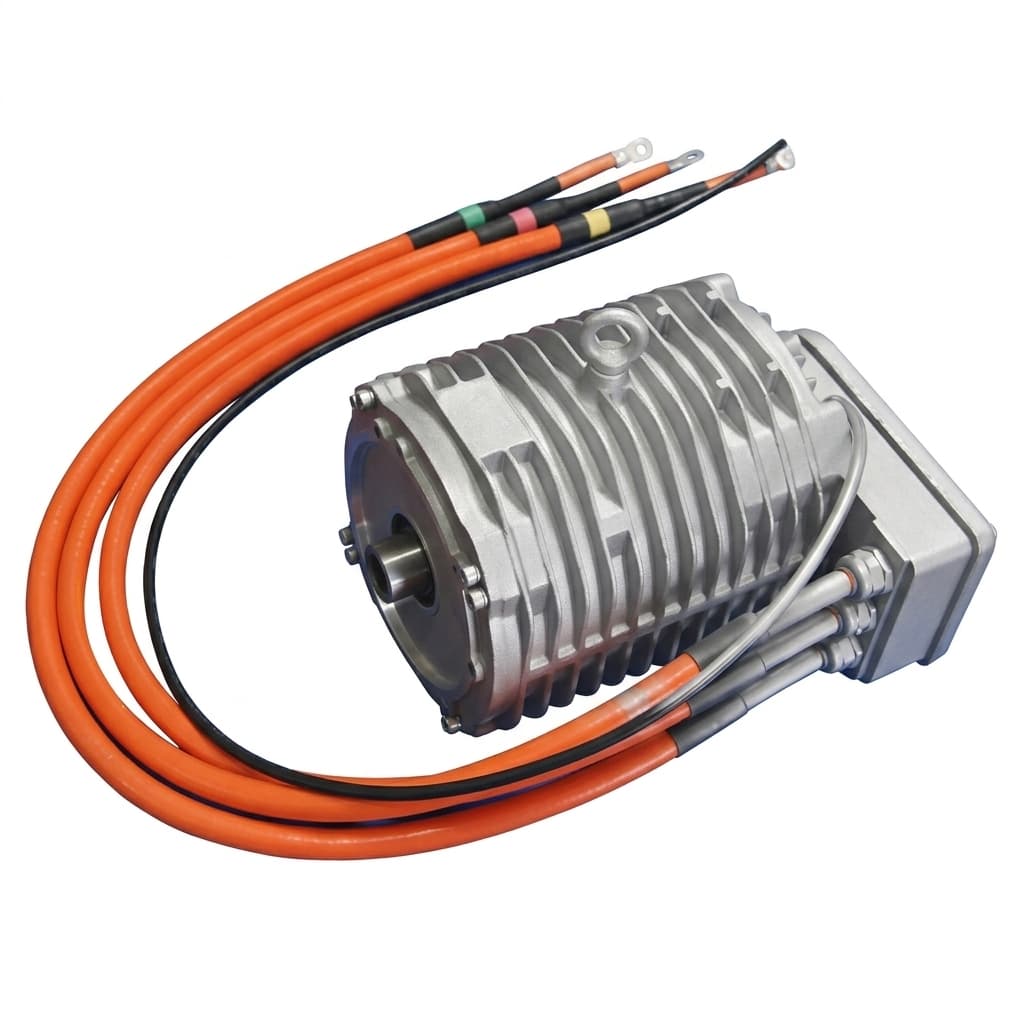
Axial Flux vs. Radial Flux Motors: A Detailed Engineering Comparison
An engineering analysis of the technical differences, torque density advantages, magnetic flux paths, and manufacturing tradeoffs between axial flux and radial flux permanent magnet motors.
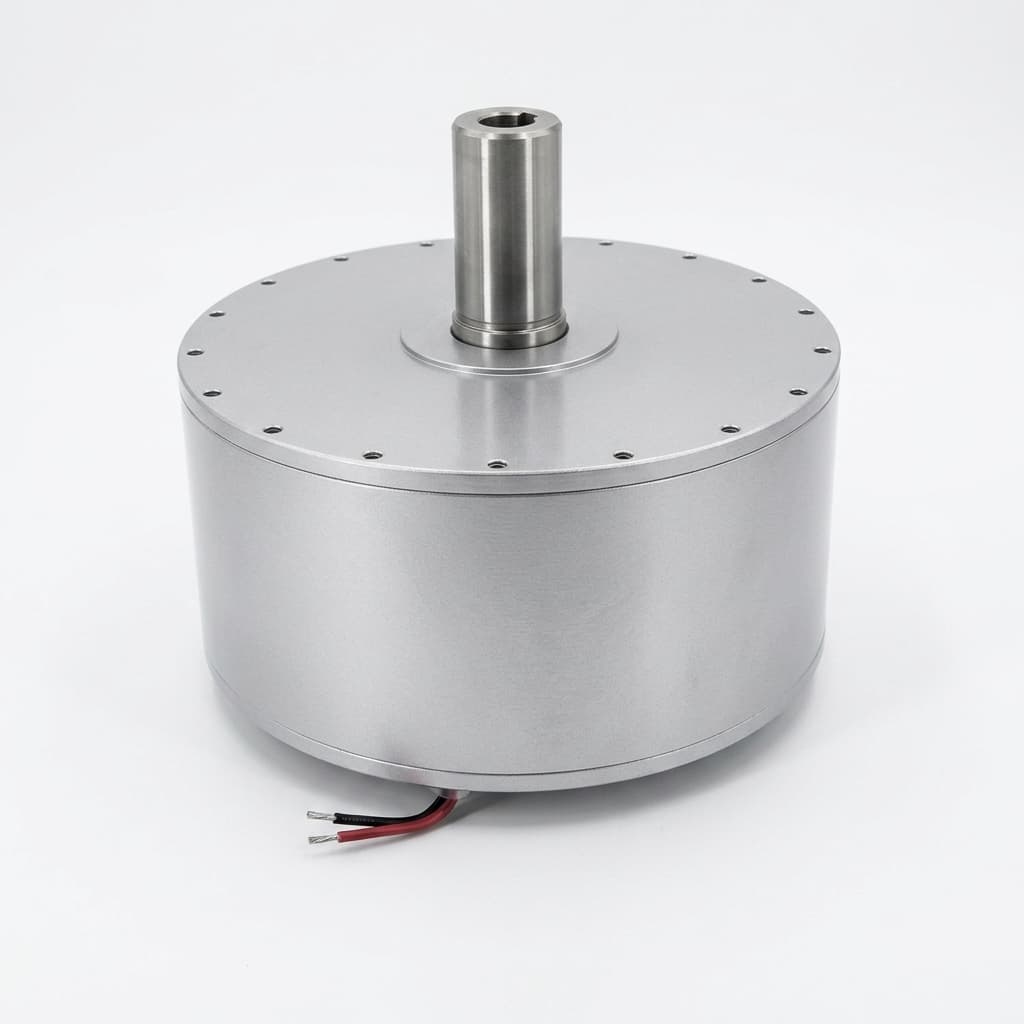
Why Coreless Axial Flux Generators are Dominating Light Renewable Energy
Discover why coreless maglev AFPM generators are becoming the gold standard for vertical axis wind turbines (VAWT), micro-hydro, and low-RPM energy capture.
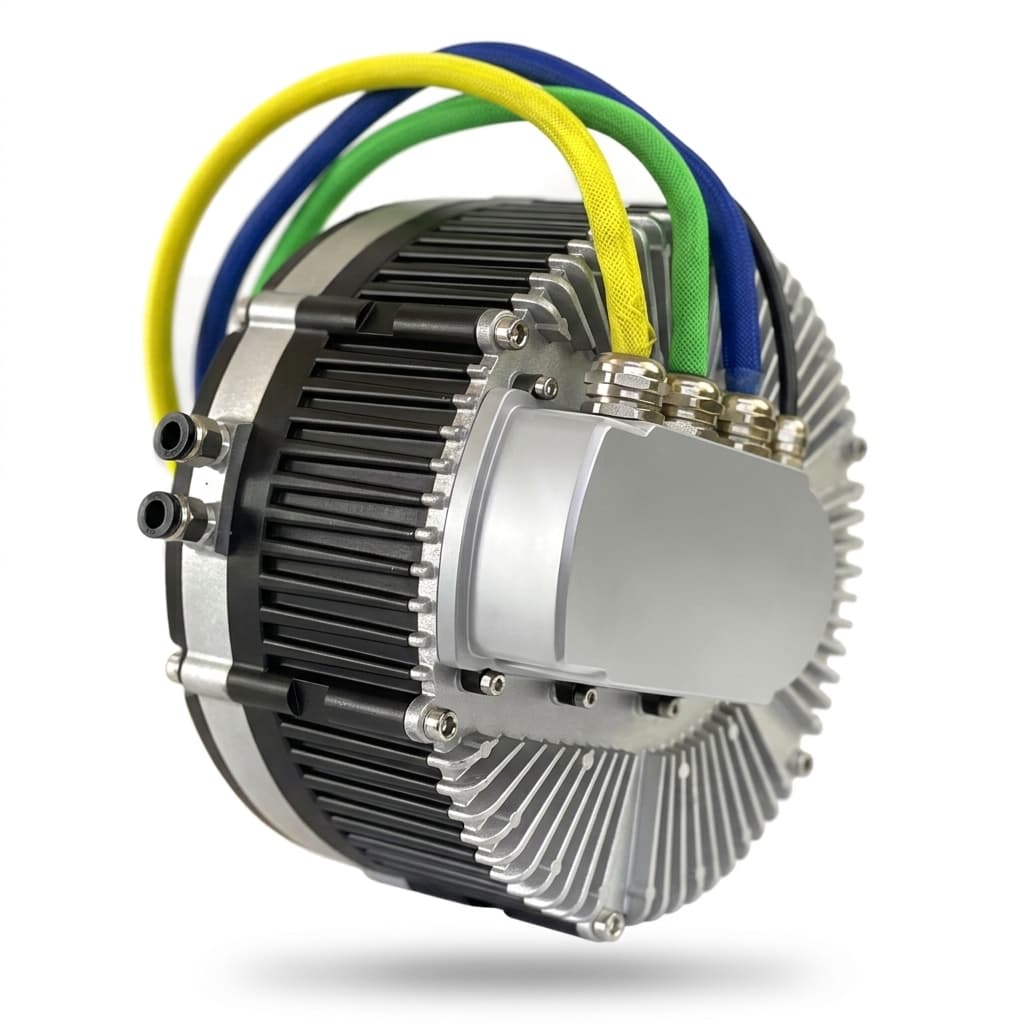
Halbach Array Magnets in Axial Flux Motor Design: When Does It Make Sense?
Technical analysis of Halbach array magnet configurations in AFPM motors — covering flux concentration benefits, manufacturing complexity, cost tradeoffs, and practical OEM sourcing guidance.