
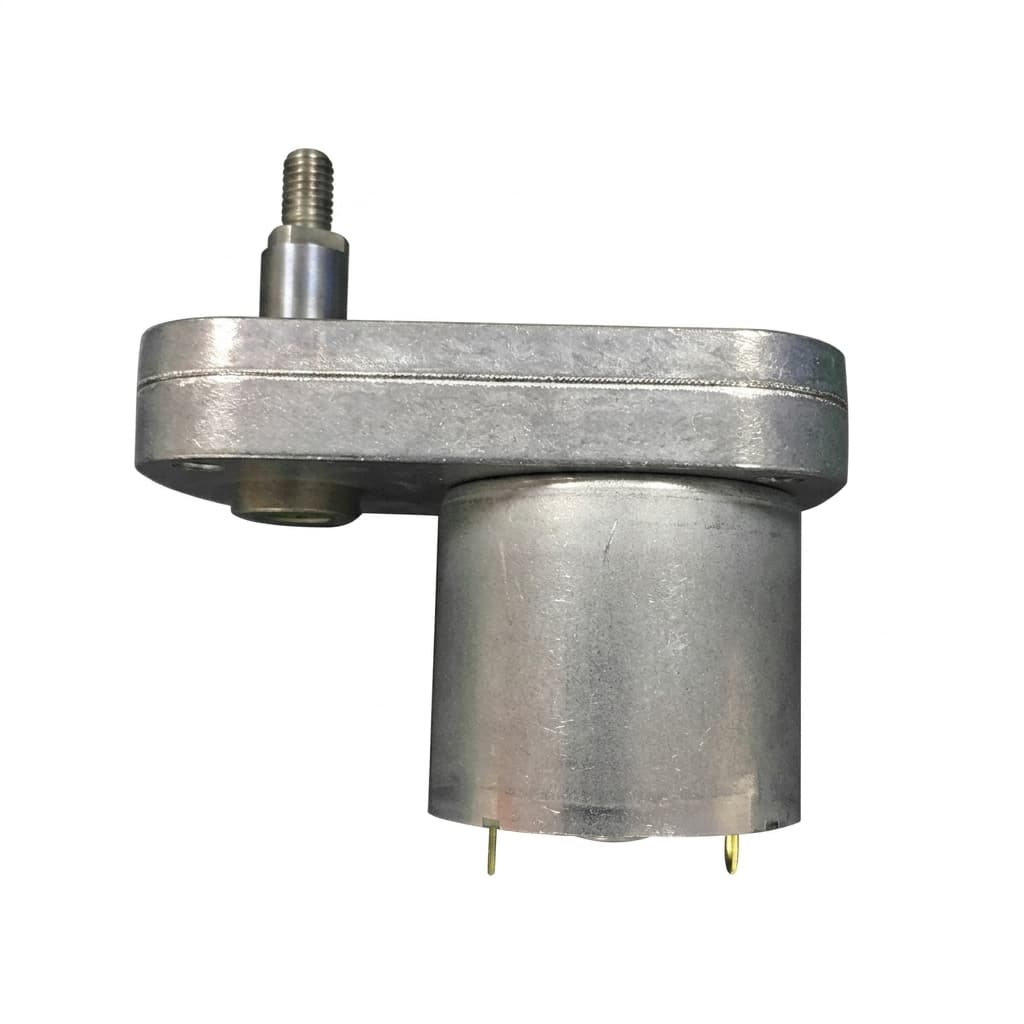
PanGood's 25.73 kW/kg Axial Flux Motor Breakthrough: Implications for Robotics and eVTOL Sourcing
PanGood and NIMTE announce a record-breaking 25.73 kW/kg axial flux motor and a 300,000-unit production line. Explore the engineering and procurement impact for robotics and eVTOL.
Decision-Level Conclusion: In June 2026, PanGood Power (盘毂动力) and the Ningbo Institute of Materials Technology and Engineering (NIMTE, CAS) achieved a breakthrough in axial flux permanent magnet (AFPM) motors, hitting an effective power density of 25.73 kW/kg. Concurrently, a large-scale production line (300,000 units/year) was launched in Lanxi, Zhejiang. This fundamentally de-risks the sourcing of high-power-density motors for weight-constrained applications like humanoid robots and eVTOLs, giving procurement teams a viable mass-production pathway while enabling engineers to implement compact, direct-drive solutions.
1. What Changed (Last 30 Days)
The most significant change is the transition of ultra-high power density AFPM motors from a lab-constrained concept to a highly scalable product, enabled by novel material science.
The core of this breakthrough is the newly developed PGH (PanGood High) magnetic steel. Historically, axial flux motors operating at extremely high speeds suffered from magnetic demagnetization, structural deformation, and excessive eddy current losses. The PGH magnet specifically addresses these limitations, offering superior magnetic energy product and mechanical strength.
Key Performance Specifications vs. Traditional Motors
| Parameter | PanGood/NIMTE AFPM (2026) | Traditional Radial Flux Motor | Buyer & Engineer Implication |
|---|---|---|---|
| Effective Power Density | 25.73 kW/kg | 4 - 8 kW/kg | Massive weight reduction allows higher payload in eVTOLs. |
| Torque Density | 293 N·m/kg | < 100 N·m/kg | Enables direct-drive without heavy gearboxes in robotic joints. |
| Maximum Speed | 18,000 rpm | 10,000 - 15,000 rpm | High-speed operations suitable for advanced aerodynamic applications. |
| Overall Weight | Approx. 50% Reduction | Baseline | Lowers overall system inertia and improves dynamic response. |
| Axial Volume | Approx. 50% Reduction | Baseline | Fits into extremely tight spaces (e.g., shoulder/hip joints of robots). |
| Magnetic Material | PGH Customized Magnetic Steel | Standard NdFeB | Higher temperature stability and resistance to demagnetization. |
| Production Capacity | 300,000 units/year (Lanxi) | High (Standardized) | Shifts technology from prototype sourcing to scalable BOM integration. |
| Target Application | eVTOL, Humanoid Robots, NEVs | General Purpose | Tailored engineering specs for advanced mobility and robotics. |
| Cost Profile | Balanced for mass production | Fully amortized | Lowers the barrier to entry for next-gen mobility startups. |
| Availability | Q3/Q4 2026 (Commercial scale) | Immediately available | Procurement can begin sampling and qualifying for 2027 platforms. |
2. Why It Matters for Buyers and Engineers
For engineers, the 50% reduction in weight and volume changes the design paradigm. In humanoid robotics, every gram added to an extremity exponentially increases the torque required at the proximal joints. By utilizing an AFPM with 293 N·m/kg, engineers can shift towards direct-drive architectures, eliminating backlash-prone gearboxes, improving back-drivability, and enhancing force control.
For procurement teams, the launch of the Lanxi factory with a 300,000-unit annual capacity is the true differentiator. Previously, high-performance AFPMs were limited to boutique aerospace suppliers or high-end automotive (like YASA). PanGood’s capacity provides supply chain stability and predictable pricing models, essential for commercializing eVTOLs and fleet robotics.
Volume and Weight Comparison
3. Risks and Constraints
While the specifications are groundbreaking, several risks and boundaries must be acknowledged before full-scale adoption:
Application Boundaries
- Ideal Use Cases: Humanoid robotics (direct-drive joints), eVTOLs (weight-critical), and distributed wheel-side drives for commercial buses (optimizing cabin space).
- Not Recommended For: Standard heavy commercial trucking or stationary industrial applications where weight/volume savings do not justify premium pricing.
Integration Risk Matrix
| Risk Domain | Risk Level | Trigger Condition | Mitigation Strategy | Evidence Gap |
|---|---|---|---|---|
| Thermal Limit | High | Sustained operation near 18,000 rpm | Active liquid cooling design | Missing continuous power degradation curves in public data |
| Supply Chain | Medium | Over-reliance on proprietary PGH steel | Secure long-term allocation agreements | Secondary supplier availability unconfirmed |
| Yield & Scaling | Medium | Initial ramp-up of the 300k Lanxi line | Batch sampling and factory audits | Real-world defect rates at scale are not yet published |
4. Who Should Act Now (Action Checklist)
For Engineering Teams
- [ ] Request Thermal Profiles: Demand continuous vs. peak power thermal degradation curves from PanGood to design appropriate cooling loops.
- [ ] Evaluate Direct-Drive Feasibility: Re-calculate joint kinematics in robotic applications assuming a gearbox removal, utilizing the 293 N·m/kg torque density.
- [ ] Order Prototypes: Secure early engineering samples (A-samples) for dyno testing to verify the 18,000 rpm mechanical integrity.
For Procurement and Sourcing Teams
- [ ] Audit the Lanxi Facility: Schedule a site visit to the new Zhejiang plant to assess automation levels and quality control bottlenecks.
- [ ] Review PGH Sourcing Agreements: Ascertain the supply chain security of the NIMTE-developed PGH magnetic steel. Is it monopolized, or are there secondary material suppliers?
- [ ] Negotiate Volume Ramps: Lock in pricing for 2027/2028 based on the 300,000-unit capacity, ensuring priority allocation for eVTOL certification runs.
5. Decision Roadmap for eVTOL and Robotics Integration
The transition from a radial flux motor to the PanGood AFPM requires a structured evaluation.
6. FAQ
Q: Is the 25.73 kW/kg power density peak or continuous?
A: It is listed as the maximum effective power density achievable at peak RPM (18,000 rpm) under laboratory validation conditions. Continuous power density will be lower and heavily dependent on the integration of liquid cooling systems.
Q: How does the PGH magnetic steel differ from standard NdFeB magnets?
A: PGH steel was explicitly developed by NIMTE to address the structural and magnetic challenges of high-speed axial flux configurations, offering improved thermal stability and mechanical strength to prevent rotor deformation.
Q: What is the current production capacity for this motor?
A: PanGood Power has announced the completion of a large-scale production line in Lanxi, Zhejiang, capable of producing 300,000 units annually.
Q: Are these motors suitable for heavy commercial vehicles?
A: While PanGood targets New Energy Vehicles (NEVs), the extreme power-to-weight ratio of this specific motor makes it exceptionally suited for weight-critical applications like eVTOLs and humanoid robotics, rather than standard heavy commercial trucking.
7. Sources and Verification
- Science and Technology Daily / Chinese Academy of Sciences (June 2026): Announced the breakthrough of the 25.73 kW/kg axial flux motor and the successful development of PGH magnetic steel by NIMTE and PanGood Power, confirming the Lanxi mass production scale. CAS News | STDaily
- China Buses / Industry Reports (June 2026): Highlighted application scenarios including distributed wheel-side drives for transit buses across 9 core industry tracks, emphasizing space optimization. ChinaBuses
- PanGood Official Communications (June 2026): Validated the performance metrics (18,000 rpm, 293 N·m/kg) and the 50% volume/weight reduction claims. PanGood Official
Author

Categories
More Posts

Specifying Axial Flux Motors for 800V Architectures: Insulation & PD Risks
Learn how to specify 800V axial flux motors for SiC inverters: PDIV limits, VPI checks, insulation classes, and RFQ evidence to request from suppliers.
Sourcing Dual-Rotor Axial Flux Motors: An OEM Buyer's Guide
An engineering guide for procurement and engineering teams on how to specify, validate, and source dual-rotor AFPM motors from reliable OEM manufacturing partners.
Why Coreless Axial Flux Generators are Dominating Light Renewable Energy
Discover why coreless maglev AFPM generators are becoming the gold standard for vertical axis wind turbines (VAWT), micro-hydro, and low-RPM energy capture.